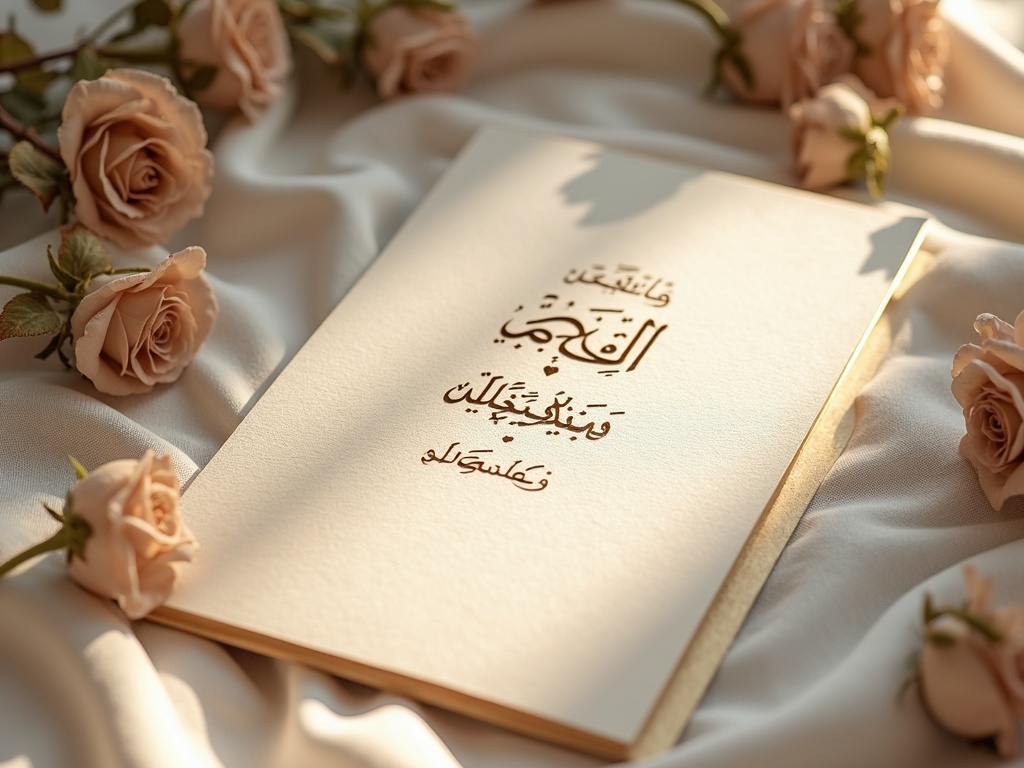
Your future mother-in-law has never met your grandmother. One speaks Cantonese; the other speaks Portuguese. Both will be seated in the same room, watching you make the most significant promise of your life. The question isn't just how to translate the words — it's how to make both women feel like they belong to the same story.
Why Most Etiquette Guides Pick a Side
The problem with most wedding etiquette advice is that it assumes a single cultural frame. Emily Post was writing for a particular kind of American household. Debrett's was writing for a particular kind of English one. Even the more modern guides tend to treat one tradition as the default and everything else as a charming addition.
When you're planning a genuinely intercultural wedding — one where neither family's customs are the obvious baseline — that framing quietly fails you. You end up bolting a tea ceremony onto a church service, or adding a hora to a Hindu reception, and the result feels like a highlights reel rather than a coherent day.
The better starting point is to treat both traditions as equally legitimate and equally in need of explanation. That shift in perspective changes almost every decision that follows, starting with the invitation.
Inviting Two Families Into the Same Event
The invitation is the first moment both families encounter the event, and it carries more weight than most couples realise. For one family, a formal printed card signals respect. For another, a digital invitation with embedded video feels personal and modern. Neither instinct is wrong — they're just different.
Before you design anything, have a direct conversation with both sets of parents about what an invitation means to them. You may find that your partner's family expects the bride's parents' names listed first; yours may expect a joint listing. One family may consider an envelope-within-an-envelope essential; the other may have never seen one.
For a two-culture wedding, the safest approach is to ask rather than assume. A single conversation — even a short one over video call — will tell you more than any etiquette book written for a single tradition.
Wording the Invitation: What Each Family Is Actually Reading For
Families from different backgrounds scan an invitation for different signals. Some are looking for the names of the hosts — is it the couple, or the parents? Others are reading for the level of formality, which they'll use to decide what to wear and what gift is appropriate. Others want to know immediately whether children are welcome.
In fusion wedding etiquette, the wording often has to do double duty. Consider a couple where one partner comes from a Nigerian Yoruba family and the other from a Swedish one. The Yoruba family may expect elaborate, celebratory language that honours the families' union. The Swedish family may prefer something spare and direct. Both are reasonable. The solution isn't to split the difference into blandness — it's to let each language version speak naturally to its audience.
If you're printing bilingual invitations, resist the urge to do a word-for-word translation. Write each version fresh, in the register that feels right for that family, covering the same essential facts. The date, the venue, the dress code, and the RSVP details need to be identical. The warmth and phrasing can differ.
Translating Without Losing the Point
Machine translation has improved dramatically, but it still stumbles on ceremony. "The honour of your presence is requested" becomes something clinical in automated Portuguese. A phrase that carries deep meaning in one language often lands flat — or worse, sounds odd — when translated literally.
For anything that will be read aloud or printed formally, hire a human translator who has some familiarity with wedding language in both cultures. Brief them on tone, not just content. Tell them whether you want formal or warm, traditional or contemporary. If you have a bilingual friend or family member you trust, ask them to review the final version — not to translate it, but to read it as a guest would and flag anything that feels off.
The same principle applies to the ceremony programme. A guest who doesn't speak the ceremony language should be able to follow what's happening without feeling like they're reading a legal document. Short, clear explanations of each ritual — written with genuine warmth — go a long way.
Day-Of Moments: Readings, Music, and Food
The ceremony and reception are where cross-cultural wedding etiquette becomes most visible, and most felt. A few things worth thinking through carefully:
- Readings: If you're having readings in two languages, choose readers who are genuinely comfortable performing in front of a crowd, not just fluent. A hesitant reading in any language loses the room.
- Music: The transition between cultural musical moments is where receptions can feel disjointed. Work with your DJ or band to treat the playlist as a single arc, not two separate sets stitched together.
- Food: If you're serving dishes from both culinary traditions, label them clearly — not just for dietary reasons, but so guests can understand what they're eating and why it matters. A small card explaining that the jollof rice was made from a family recipe does more for atmosphere than any centrepiece.
- Rituals: If one family's tradition involves a ritual the other family won't recognise, a brief explanation from the officiant or MC keeps everyone present rather than confused.
- Seating: Mixed seating — rather than clustering each family together — encourages conversation. Assign tables thoughtfully, pairing guests who share a language or a connection to the couple.
None of this requires a military-level logistics plan. It requires someone — you, your partner, or a coordinator you trust — to walk through the day from the perspective of a guest who knows nobody and speaks only one of the languages present.
The Invitation as a First Act of Hospitality
There's a reason this article keeps returning to the invitation. In a cross-cultural wedding, it's not just a piece of paper or a digital card — it's the first act of hospitality you extend to both families. It tells each guest: we thought about you specifically.
Venito's bilingual invitation builder lets you create a single shareable link that displays in the guest's preferred language, so you're not managing two separate versions of your RSVP list. It's a small thing, but it removes one of the more tedious logistical headaches from a planning process that already has plenty.
What Both Families Actually Want
Strip away the specific customs and what most families want from a wedding is the same: to feel that their child — or their child's partner — is loved and celebrated. They want to understand what's happening. They want to feel welcome rather than tolerated.
The couples who navigate this best aren't the ones who achieve perfect cultural balance on paper. They're the ones who communicate early, explain things with patience, and treat the differences between their families as something interesting rather than something to manage. That attitude, more than any wording choice or seating plan, is what guests remember.